
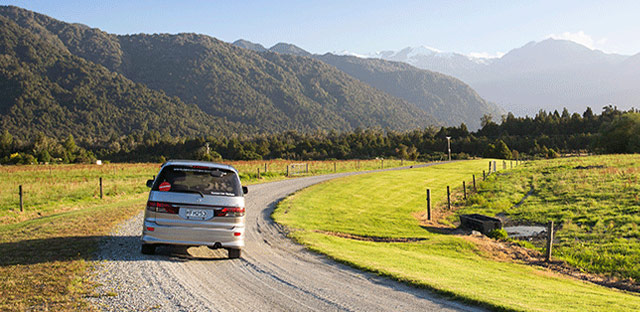
Driving in New Zealand
Before you drive in New Zealand make sure you are prepared, both legally and in your knowledge of the country’s road rules.
What’s different about driving in New Zealand?
People who are new to New Zealand often find the following road rules and situations the most difficult:
- Driving on the left side of the road
- Roundabouts
- New Zealand’s unique ‘give way’ rule at intersections
- Merging on motorways
- Watching out for pedestrians and cyclists
- Adjusting to different speed zones
- Parking
- Hilly, narrow or winding roads, which mean your journey may take longer than expected
Can I drive in New Zealand?
You must have a current and valid overseas driver licence or international driving permit (IDP) to drive in New Zealand.
A current and valid overseas driver licence means that your licence allows you to legally drive in your own country. If you are disqualified from driving or your licence is currently suspended, expired or revoked, then you are not allowed to drive in New Zealand.
If you are in New Zealand for up to one year
- You can use a current and valid driver licence from another country.
- If your driver licence is not in English, you should have an IDP or English translation of your licence so that the New Zealand Police can read the details on your licence. (NB: a translation must be from a translation service that has been approved by the NZ Director of Land Transport).
If you plan to stay and drive in New Zealand for more than one year
- If you do have a current overseas driver licence or international driving permit, you can drive using that for a maximum of 12 months from the date you arrive in New Zealand.
- If you are using an overseas licence or an international driving permit, you must convert to a New Zealand driver licence before one year has passed.
- Some countries require similar driving skills and have similar licensing systems to New Zealand's. Depending on the country you have come from and the class of licence you are converting, you may not have to sit theory and/or practical tests.
- Phone 0800 822 422 (free within New Zealand) or visit the Land Transport Authority’s website for more information and to apply.
Drive to the conditions
It is important that you do not exceed the set speed limits while driving, and keep in mind you may need to drive even more slowly than the set speed limit at times. In New Zealand, there is a slogan that every driver knows: “Drive to the conditions; when they change reduce your speed”!
Many New Zealand roads are narrow, winding or hilly, which reduces your ability to see what is coming up ahead. Some roads are unsealed and dusty, particularly in rural areas where you may see farm animals being moved along farming roads.
The weather in winter can make the roads slippery and icy and can also make it difficult to see oncoming traffic. New Zealand weather is often unpredictable, even in summer.
Do I have to wear a seatbelt?
In New Zealand it is compulsory that you and your passengers must always wear a safety belt. In addition, children under five years must be restrained with appropriate, approved restraints, which are available on a rental-basis from Plunket.
Speed limits
Every road in New Zealand has a speed limit. The actual speed limit depends on the type, use and condition of the road – so the speed limit in a suburban street is likely to be 50 km/h, while the usual speed limit on a motorway is 80 to 100 km/h. Also, note that, if you’re approaching a school, the speed limit will decrease during school hours.
The New Zealand Police are strict on drivers who do not adhere to the speed limit. If you are caught speeding, you could face severe fines and penalties.
Obey the road rules
The New Zealand Police are very strict on drivers who drive dangerously or break the driving laws. If you are caught, you may be required to pay a substantial fine or face even more severe penalties, such as loss of licence or prison.
Exercise caution whenever driving, and you’ll be sure to enjoy New Zealand’s well kept roads and beautiful scenery.